
Peptide shipping temperature excursions: evidence for lot review
Review peptide transport excursions using logger records, packaging configuration and material-specific stability evidence. Define receipt and disposition records.
5 min read · Sources checked 2026-10-31
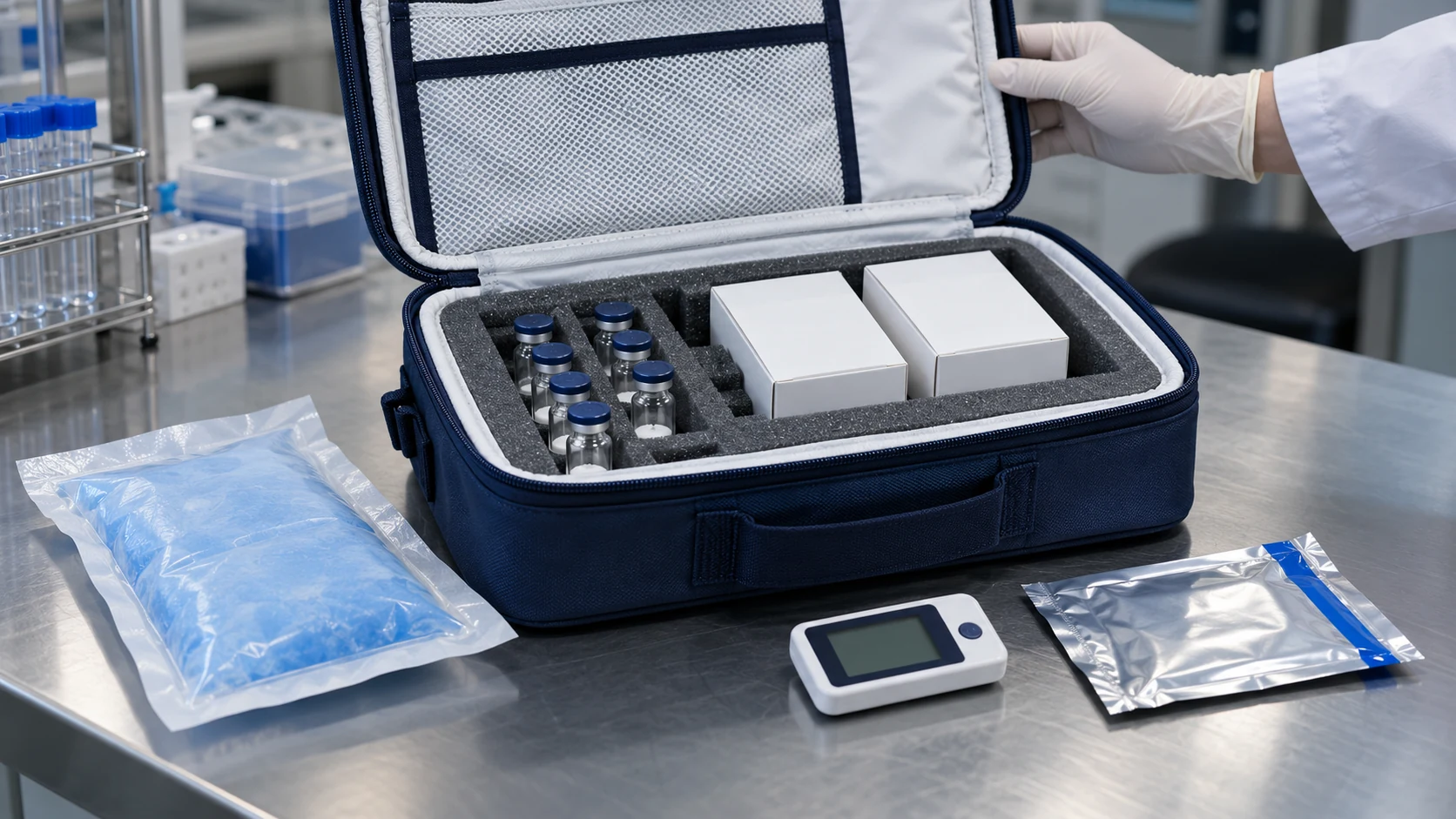
A peptide shipment’s temperature alarm should be reviewed against its actual time-temperature record and material-specific evidence. The package, logger and lot history explain what happened in transit. They do not, by themselves, establish whether the material remains acceptable.
Separate the storage instruction from the transport agreement
Ask the supplier to state both conditions before shipment. WHO’s model guidance for temperature-sensitive pharmaceuticals recognises that storage and transport ranges may differ and ties acceptable excursion time to stability data. [1] That is useful context for organising a research-material shipment, while the actual conditions must come from the particular material’s agreed specification.
A generic refrigerated-shipping option cannot establish the correct transport condition for every peptide form. Record the material form, container and agreed delivery presentation. If the supplier has evidence for a different preparation or pack, ask whether it supports the configuration being shipped.
Assign the decision owner before dispatch
The carrier can report delivery events. The receiving team can record the physical condition and download the logger. A designated technical or quality reviewer should decide how the findings relate to the material specification. Agree how the parties contact that reviewer if a shipment arrives outside normal working hours.
Read the logger record as a measurement
Keep the complete data file, logger identifier, start and stop information, time zone, sampling interval and recorded placement within the package. An alarm summary compresses the event and may leave out details that affect interpretation. A photograph of the current display cannot reconstruct the entire transport history.
NIST explains temperature traceability through documented measurement comparisons and associated uncertainties. A purchasing review should therefore request relevant calibration information and consider whether its range supports the temperatures of interest. A device label saying “traceable” gives less detail than the calibration record itself. [2]
Check the limits of the sampling interval
For an illustrative logger setup, readings taken every 10 minutes provide six observations per hour. They do not describe every moment between observations. Keep the interval with any summary of the duration outside the agreed range, and ask the reviewer how uncertainty around the event boundaries should be handled.
Also confirm that the logger ran during the period being assessed. A missing file segment, an unstarted logger and a reading taken after unpacking create different evidence gaps. Record the gap directly rather than replacing it with an assumption that the transport remained within limits.
Distinguish shipper qualification from material stability
ISTA Standard 7E addresses thermal exposure of packages in parcel-delivery environments. Its public overview describes profiles based on transport conditions. [3] A thermal-packaging test supports the performance of a stated pack configuration under stated conditions. A material’s stability assessment answers a separate question about its attributes after exposure.
| Evidence | Question it supports | Details to retain |
|---|---|---|
| Packaging qualification | How did the defined shipper perform in the assessed profile? | Pack revision, payload, coolant arrangement and tested duration. |
| Transit logger | What temperatures did the logger record on this shipment? | Complete file, location, interval, time base and calibration record. |
| Material stability assessment | What exposure evidence supports the lot decision? | Relevant material form, container, attributes and assessment scope. |
| Receipt inspection | What arrived and in what physical condition? | Lot identity, seals, damage, arrival time and observed discrepancies. |
Matching only the outer-box size is insufficient for a repeat pack review. Record changes in payload or internal arrangement so the team can assess whether the earlier qualification still applies. The receiving record should identify the pack actually used, not just the name of a shipping service.
Build a usable excursion file
- Identify the lot, material form, shipment and agreed transport conditions.
- Retain the original logger file and physical receipt observations.
- Describe the event using the available time-temperature evidence and its limitations.
- Ask the designated reviewer to connect the event with the relevant stability evidence.
- Record the decision, rationale, approver and any restrictions or further work.
Consider a hypothetical delivery with intact seals but an incomplete logger file. The intact pack supports the receipt observation. It does not fill the missing temperature interval. The reviewer may need additional transport records or a different disposition because the evidence gap remains. Keep the final decision with the batch record so that the same unresolved event does not resurface during repeat ordering.
Put transport requirements into the enquiry
State the delivery destination, receiving hours, expected handovers and contact for delays. Ask which pack configuration and monitoring arrangement are proposed. Agree who receives the data and who can make a material decision if the planned route changes.
The storage planning guide covers the longer-term receiving requirements. Read stability evidence and shelf-life questions when defining the supporting data. For a new supply route, include the transport record requirements in the material enquiry and coordinate the handover through export support.
Frequently asked questions
Does a temperature alarm mean that a peptide lot must be rejected?
An alarm identifies a condition for review. The designated reviewer needs the actual exposure record, relevant material evidence and agreed specification to reach a documented decision.
Can the storage range and transport range be different?
They can differ when supported for the particular material. Obtain both from the supplier and record the evidence and conditions that support the transport agreement.
Does a qualified insulated shipper prove peptide stability?
It supports the thermal performance of a defined packaging configuration under the assessed conditions. Material stability and the actual shipment record must be reviewed separately.
Which logger document should I retain after receipt?
Retain the original data file with the logger identifier, placement, sampling interval, time base and relevant calibration information. Keep it linked to the shipment, material lot and final review decision.
Sources and further reading
- World Health Organization: TRS 961, Annex 9: Model guidance for storage and transport of time- and temperature-sensitive pharmaceutical products, 2011
- NIST: Mercury Thermometer Alternatives: What Is Traceability?
- International Safe Transit Association: Standard 7E and transport-package test selection, public overview
Sources checked on 31 October 2026. The cited standards, guidance and studies have their own application scopes. They do not certify our products or establish batch results.