
Endotoxin, bioburden and sterility: specify peptide test scope
Separate endotoxin, bioburden and sterility questions when sourcing peptide materials. Define sample stages, method suitability, units and batch documentation.
6 min read · Sources checked 2026-10-31
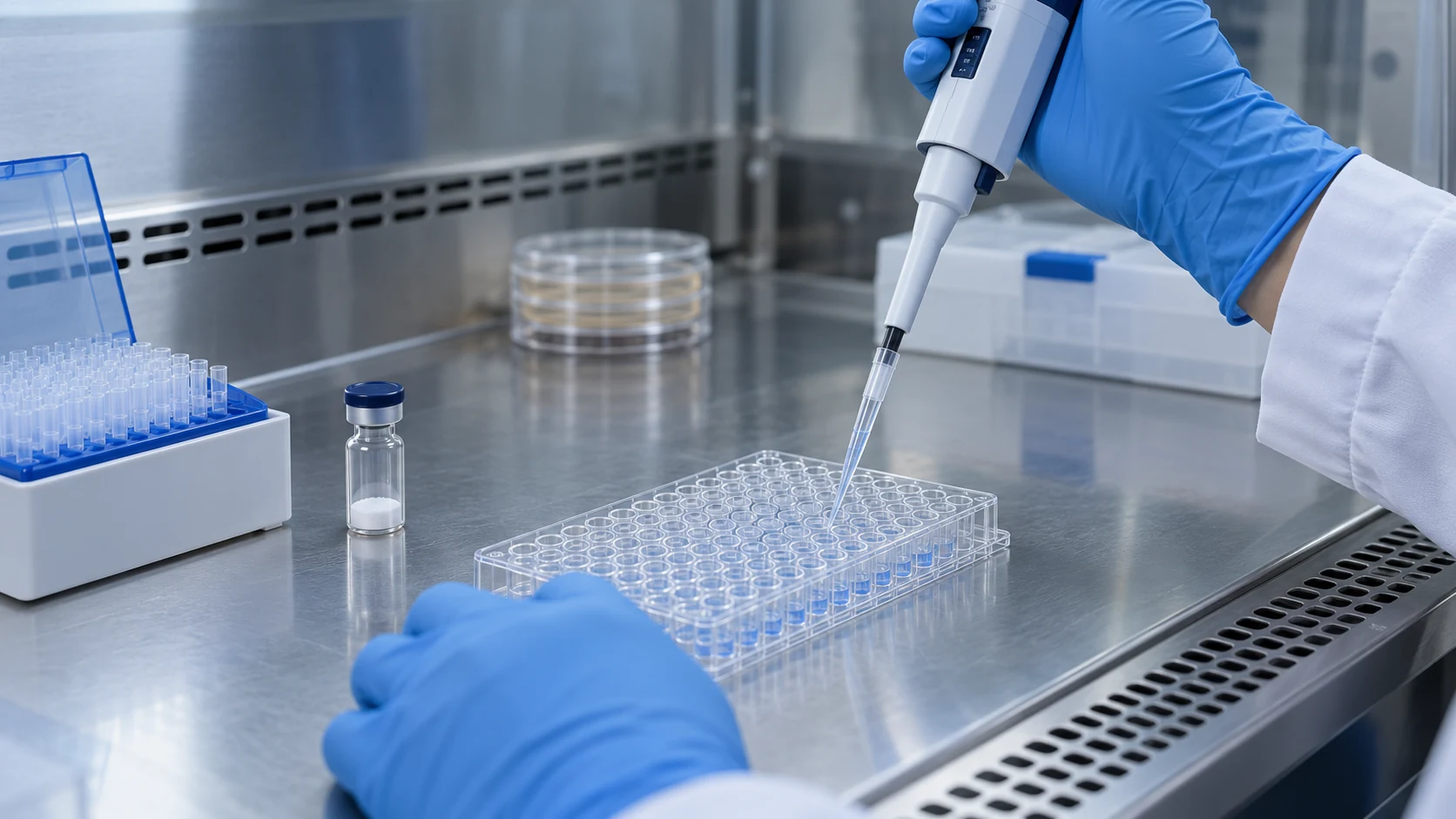
Endotoxin testing, bioburden assessment and sterility testing address different attributes. A peptide enquiry should name the required attribute, the sampled material stage, the method and the acceptance basis. A clear vial or high chemical purity percentage cannot answer those questions.
Write the laboratory question before requesting a certificate
A receiving team may want to understand an unexpected signal in a research assay, qualify a raw material for a development process or review the microbiological claim attached to a finished presentation. Those situations require different records. State the actual task and ask the responsible laboratory which evidence supports it.
Research-use material remains restricted to its stated laboratory purpose. Adding a microbiological test to the document package does not establish suitability for injection, human use or animal consumption. For a regulated project, the relevant quality and regulatory team must determine the complete requirements for the product and route.
Keep the three attributes separate
| Attribute | Question being assessed | Interpretation to avoid |
|---|---|---|
| Bioburden | Which recoverable microorganisms are detected or counted under the stated conditions? | Treating an enumeration result as an endotoxin measurement. |
| Bacterial endotoxins | What endotoxin activity is detected by the specified method? | Reading a low result as proof that a material is sterile. |
| Sterility test | What is the outcome of the stated sterility test on the sampled units? | Extending that outcome to every unit without the supporting control strategy. |
USP <1119> addresses bioburden monitoring across relevant materials and process stages, including raw materials and water. Its public scope helps define what was sampled. [1] USP publishes sterility testing separately as Chapter <71>. [2] The report should preserve those distinctions instead of collapsing them into a general “microbiology passed” field.
Check the result units as well as the test name. A colony-forming-unit result describes recovery under the stated microbiological conditions. An endotoxin-unit result expresses endotoxin activity under its own method. CFU and EU are different quantities and cannot be substituted for one another in a specification.
Separate the batch stage from the delivery format
An assessment of bulk powder before filling and an assessment of filled units after a later process step describe different samples. Ask where the sample entered the process, which lot it represented and which subsequent operations occurred. A report can be valid for its stated sample while leaving the delivered presentation’s status unresolved.
Keep the container and sampling history with the result. If material was opened, transferred or subdivided before testing, record that sequence. It helps the reviewer decide whether the analytical finding describes the offered material and whether a fresh sample is needed.
Check that an endotoxin procedure suits the sample
FDA’s March 2026 endotoxin guidance discusses product-related interference and the evidence needed when moving between analytical methods. A result needs a procedure that works in the actual sample matrix. Its scope concerns regulated biological products, drugs and devices; the technical principles do not assign a universal endotoxin limit to research peptide vials. [3]
For the purchasing record, request the method reference, relevant suitability assessment, reportable result and units. If the laboratory reports a concentration for an analytical preparation, ask how it relates to the original material. Preserve any stated limitation alongside the result so that the purchasing team does not widen the claim when summarising it.
Name the reagent approach when the method changes
USP’s public introduction to <1085> notes the addition of recombinant-reagent techniques in Chapter <86>, alongside the established <85> framework. [4] A change in method description should trigger a review of what was compared and how suitability was established. The name of a newer approach is not evidence that it automatically resolves every sample interference.
Use a report matrix to prevent claim drift
Suppose a hypothetical supplier sends a raw-material bioburden report, an endotoxin report from a different lot and a photograph of sealed vials. The documents should stay in separate rows until the lot linkage is resolved. Combining them under one product heading would imply a shared evidential basis that the records have not established.
A practical review matrix records the requested attribute, sample stage, supplier lot, laboratory sample identifier, method revision, units, result and limitation. Add a final column for the reviewer and decision. That makes a missing link visible before the document set reaches a customer or appears in a product description.
What to ask before approving the microbiological scope
- Which attribute is needed for the actual laboratory application?
- Which material stage and lot will the sample represent?
- What method and suitability evidence will support the result?
- Which units and acceptance basis will the reviewer use?
- What further processing or handling takes place after the sampled stage?
- Who approves the interpretation and any wording used outside the laboratory?
Connect these questions with the quality approach and the technical documentation request. For a material enquiry, state the test scope through the research team. The guide to laboratory water and diluents addresses the separate identity and specification questions for those materials.
Frequently asked questions
Does a low endotoxin result establish sterility?
No. The tests address different attributes. Review the endotoxin result within its stated method and sample basis, and assess any sterility claim through its own testing and supporting control records.
Does a sterile label establish a low endotoxin result?
A sterility claim does not replace a bacterial endotoxin result. Request the attribute-specific evidence and lot linkage needed for the actual project.
Which units should appear in a peptide endotoxin report?
The units must match the result and sample basis, such as a stated activity per volume or per material mass where appropriate. The laboratory should explain any preparation calculation needed to interpret the original sample.
Does microbiological testing change the intended use of research materials?
No. A test report does not change a research material into a product suitable for human or animal administration. Any regulated product needs its own complete development and compliance assessment.
Sources and further reading
- United States Pharmacopeia: General Chapter <1119>: Bioburden Monitoring, public preview
- United States Pharmacopeia: General Chapter <71>: Sterility Test, public harmonisation page
- FDA: Pyrogen and Endotoxins Testing: Questions and Answers, March 2026
- United States Pharmacopeia: General Chapter <1085>: Guidelines for Bacterial Endotoxins Testing, public preview
Sources checked on 31 October 2026. The cited standards, guidance and studies have their own application scopes. They do not certify our products or establish batch results.